

Neyyabhishekam, the ceremonial anointing of Lord Ayyappa with ghee, is among the most significant offerings at Sabarimala. For the traditional pilgrim, it is the culmination of a sacred sequence: observing the vratham, preparing the Irumudi Kettu, carrying the ghee-filled coconut to Sannidhanam and finally presenting its contents for abhishekam.
The Malayalam word neyy means ghee, while abhishekam means ritual anointing. Yet the rite is not understood merely as pouring a substance over the deity. It expresses offering, purification and the devotional movement from the individual self toward the divine.
What happens during Neyyabhishekam?
Devotees traditionally bring ghee inside a specially prepared coconut carried in the munmudi, or front compartment, of the irumudi. At Sabarimala, the ghee is collected according to temple procedure and used by the priests to anoint Lord Ayyappa. After the ritual, a portion may be returned as sacred prasadam.
Kerala Tourism describes Neyyabhishekam as one of the most important and auspicious rituals dedicated to Lord Ayyappa. The precise arrangements, available timings and procedures can change according to the temple calendar and crowd management. Pilgrims should therefore follow current Travancore Devaswom Board and on-site instructions rather than depending on an old timetable.
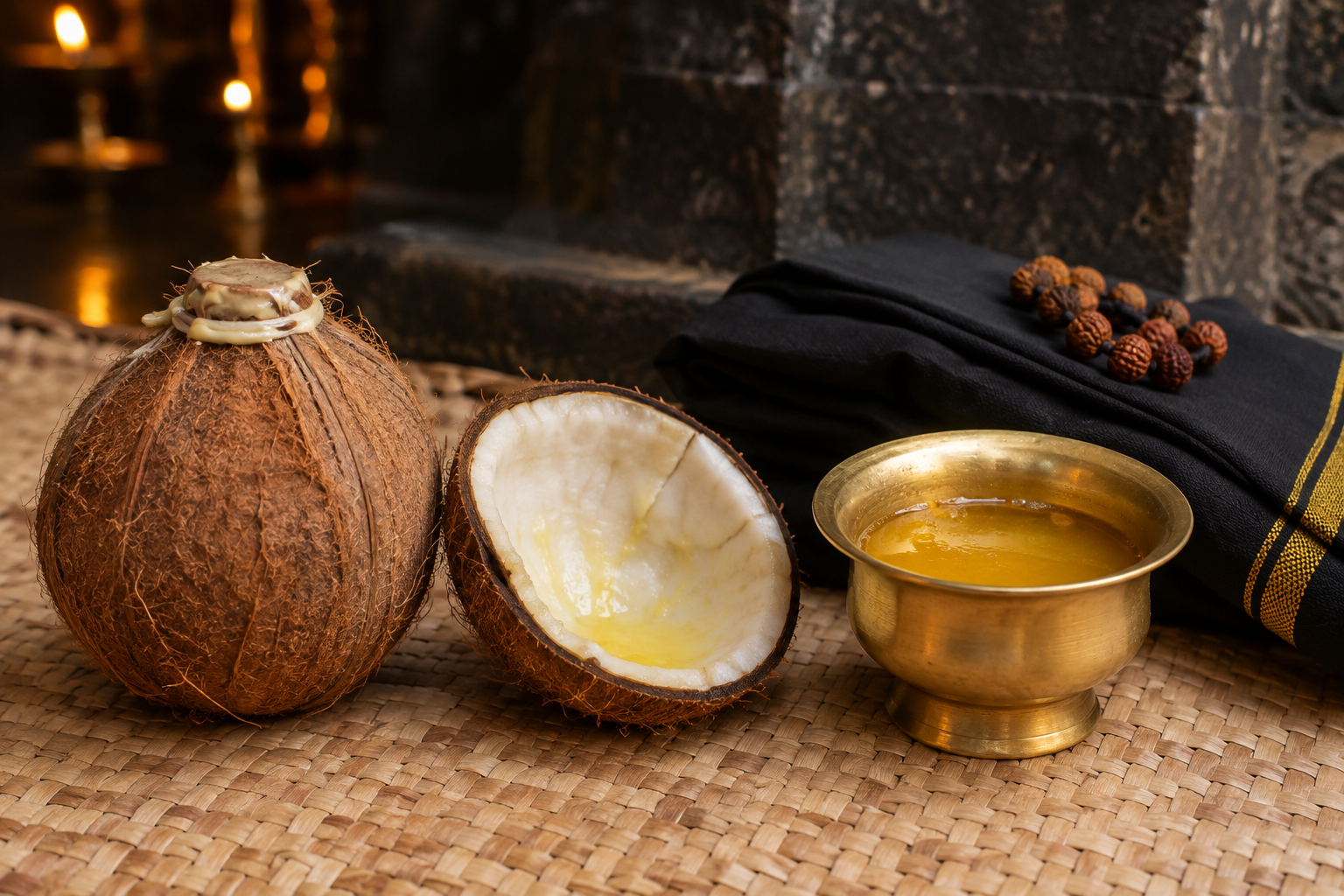
Why is ghee carried inside a coconut?
During Kettunirakkal, the water is drained from a mature coconut through a small opening. The dry interior is filled with clean ghee, and the opening is carefully sealed. The coconut is then placed in the offering compartment of the irumudi under the guidance of a guruswami.
The coconut is practical: its firm natural shell protects the offering through a demanding pilgrimage. But its importance is also symbolic. Official Kerala Tourism material explains the preparation as emptying worldly pleasures and replacing them with spiritual thought. The pilgrim takes an ordinary natural vessel, empties it, fills it with an offering and carries it with discipline toward Ayyappa.
This is why the ghee coconut should not be treated like ordinary luggage or a souvenir. Its preparation belongs within the prayerful Kettunirakkal ceremony explained in our guide to Irumudi Kettu, its two compartments and meaning.
The spiritual meaning of ghee and coconut
A widely shared devotional interpretation sees the coconut shell as representing the body and the ghee within as representing the individual soul, or jivatma. When the ghee is offered to Lord Ayyappa, it symbolizes the jivatma seeking union with the paramatma, the supreme reality.
After the ghee has been removed, the empty shell represents the body without the animating self. Traditional explanations connect its disposal in the sacred fire pit, or azhi, with the impermanence of the physical form. This should be understood as devotional symbolism rather than a literal or scientific claim.
The symbolism also resonates with the teaching examined in Tat Tvam Asi at Sabarimala. The offering turns philosophical reflection into embodied practice: what was carried as “mine” is consciously returned to the divine source.
From vratham to offering
Neyyabhishekam cannot be separated from the discipline that precedes it. The traditional pilgrimage begins with a period of vrata marked by simple living, prayer, restraint, vegetarian food and ethical conduct. The ghee-filled coconut is prepared near the end of that observance and carried only after the pilgrim has accepted the responsibilities of the journey.
Our overview of Sabarimala Mandalakalam and the 41-day vratham describes this preparation in detail. The sequence gives Neyyabhishekam its depth:
- The vratham disciplines the pilgrim's conduct and attention.
- Kettunirakkal transforms the intention into a prepared offering.
- The irumudi carries the offering through the pilgrimage.
- Neyyabhishekam completes the act of surrender at Sabarimala.
Connection with Pathinettam Padi
The traditional pilgrim approaches Sannidhanam carrying the irumudi and ascends the eighteen sacred steps in accordance with temple rules. The bundle includes the ghee offering intended for Neyyabhishekam, linking the preparation at home or a local temple with the final worship at Sabarimala.
The ascent is not simply the shortest way into the temple. It marks ritual readiness after the vrata and pilgrimage. Read more about its interpretations and access tradition in Pathinettam Padi: the eighteen sacred steps of Sabarimala.
Receiving ghee as prasadam
After Neyyabhishekam, devotees may receive a portion of ghee as prasadam according to the temple's current arrangements. Prasadam is accepted reverently as something that has been offered in worship and returned with divine blessing.
Pilgrims should use the counters and procedures designated by temple authorities. Availability, container rules, fees and collection methods may be revised, especially during high-volume pilgrimage days. Current official instructions take precedence over informal advice.
Can devotees without a ghee-filled coconut participate?
Kerala Tourism notes that devotees who do not bring a ghee-filled coconut may use abhishekam ghee made available through Devaswom arrangements. This provision should not be confused with carrying a traditional irumudi or eligibility to climb Pathinettam Padi. Those are governed by their own customs and current access rules.
A first-time visitor should ask an experienced guruswami and consult official channels before travelling. Online articles can explain the tradition, but they cannot replace live temple instructions.
Respectful preparation and practical guidance
- Prepare the ghee coconut during Kettunirakkal under experienced guidance.
- Use clean, suitable ingredients and ensure the opening is sealed securely.
- Keep the coconut in the correct compartment of the irumudi.
- Do not open, transfer or handle the offering casually during the journey.
- Follow the designated queue, collection and prasadam procedures at Sannidhanam.
- Do not break coconuts on the sacred eighteen steps; official guidance expressly prohibits it.
- Avoid unnecessary plastic and dispose of materials only in designated places.
- Check official notices for current pooja timings before the visit.
Neyyabhishekam and other abhishekams
Sabarimala observes several forms of ritual worship. Kerala Tourism separately describes Ashtabhishekam, in which eight substances are used, and other special poojas such as Pushpabhishekam and Kalabhabhishekam. Neyyabhishekam remains distinctive because the devotee's offering is carried personally through the disciplines of the pilgrimage.
The rites should not be collapsed into one another. Each has its own materials, timing and temple procedure. The shared principle is reverent offering according to established worship rather than personal improvisation.
Frequently asked questions
What does Neyyabhishekam mean?
It means the ritual anointing of Lord Ayyappa with ghee. Neyy is ghee and abhishekam is ceremonial anointing.
Where is the ghee kept in the Irumudi?
The sealed ghee-filled coconut is placed in the munmudi, the front compartment reserved for offerings to Lord Ayyappa.
Why is the coconut emptied first?
Removing its water creates a natural vessel for the ghee. Devotional teaching also interprets the emptying as leaving worldly preoccupations behind before filling oneself with spiritual purpose.
Is Neyyabhishekam performed every time the temple opens?
It is a central Sabarimala offering, but operating hours and arrangements vary with the temple calendar. Check the current Travancore Devaswom Board schedule for the intended date.
What happens to the empty coconut shell?
Traditional accounts associate the emptied shell with the azhi, the sacred fire pit. Pilgrims must follow the actual handling procedure directed by temple staff rather than disposing of it independently.
Is the returned ghee ordinary cooking ghee?
Once returned through the worship procedure it is received as prasadam. Devotees treat it reverently according to family and spiritual custom.
The offering at the heart of the pilgrimage
Neyyabhishekam brings the Sabarimala pilgrimage to a deeply personal conclusion. The offering began as ghee placed into a coconut, but it has travelled through prayer, restraint, physical effort and collective devotion. At Sannidhanam it is no longer merely something the pilgrim possesses; it becomes something consciously offered.
That movement—from preparation to surrender—is the heart of the ritual. The coconut is emptied, filled, sealed, carried and opened. The pilgrim is invited to undergo a similar inward transformation: to set aside excess, cultivate devotion and approach Ayyappa with humility. Swamiye Saranam Ayyappa.


