

Mandalakalam is the sacred annual season in which devotees of Lord Ayyappa undertake disciplined worship and prepare for the pilgrimage to Sabarimala in Kerala. Traditionally spanning 41 days, it begins in the Malayalam month of Vrischikam and culminates in Mandala Pooja. The season is not merely a countdown to a temple visit: it is a carefully lived vrata, or spiritual observance, intended to bring simplicity, self-control, equality and devotion into everyday life.
The familiar salutation Swamiye Saranam Ayyappa—“Lord Ayyappa, I seek refuge in you”—captures the spirit of Mandalakalam. Through prayer, restrained living and service, the devotee seeks to loosen the hold of ego and approach the pilgrimage with a quieter mind.
What is Sabarimala Mandalakalam?
The word mandala can denote a complete sacred cycle. In the Sabarimala tradition, Mandalakalam is observed as a 41-day period of preparation dedicated to Lord Ayyappa, the presiding deity of the hill shrine at Sabarimala. The observance brings together daily worship at home, visits to temples, ethical discipline and, for many devotees, a concluding pilgrimage.
The exact civil-calendar dates vary from year to year. Devotees planning a visit should therefore consult the current notices issued by the Travancore Devaswom Board and the relevant Kerala authorities for opening dates, booking procedures, permitted routes and safety arrangements.
Why does the vratham last 41 days?
Forty-one days allow a practice to move beyond a short burst of enthusiasm and become a steady rhythm. The body adjusts to simpler food and habits; the mind repeatedly returns to prayer; and ordinary actions become part of the vrata. The emphasis is not on hardship for its own sake, but on sustained awareness.
Customs can differ by family, region, health and the guidance of a guruswami, an experienced pilgrim who mentors first-time and returning devotees. The heart of the practice remains consistent: cleanliness, truthfulness, compassion, restraint and remembrance of Ayyappa.
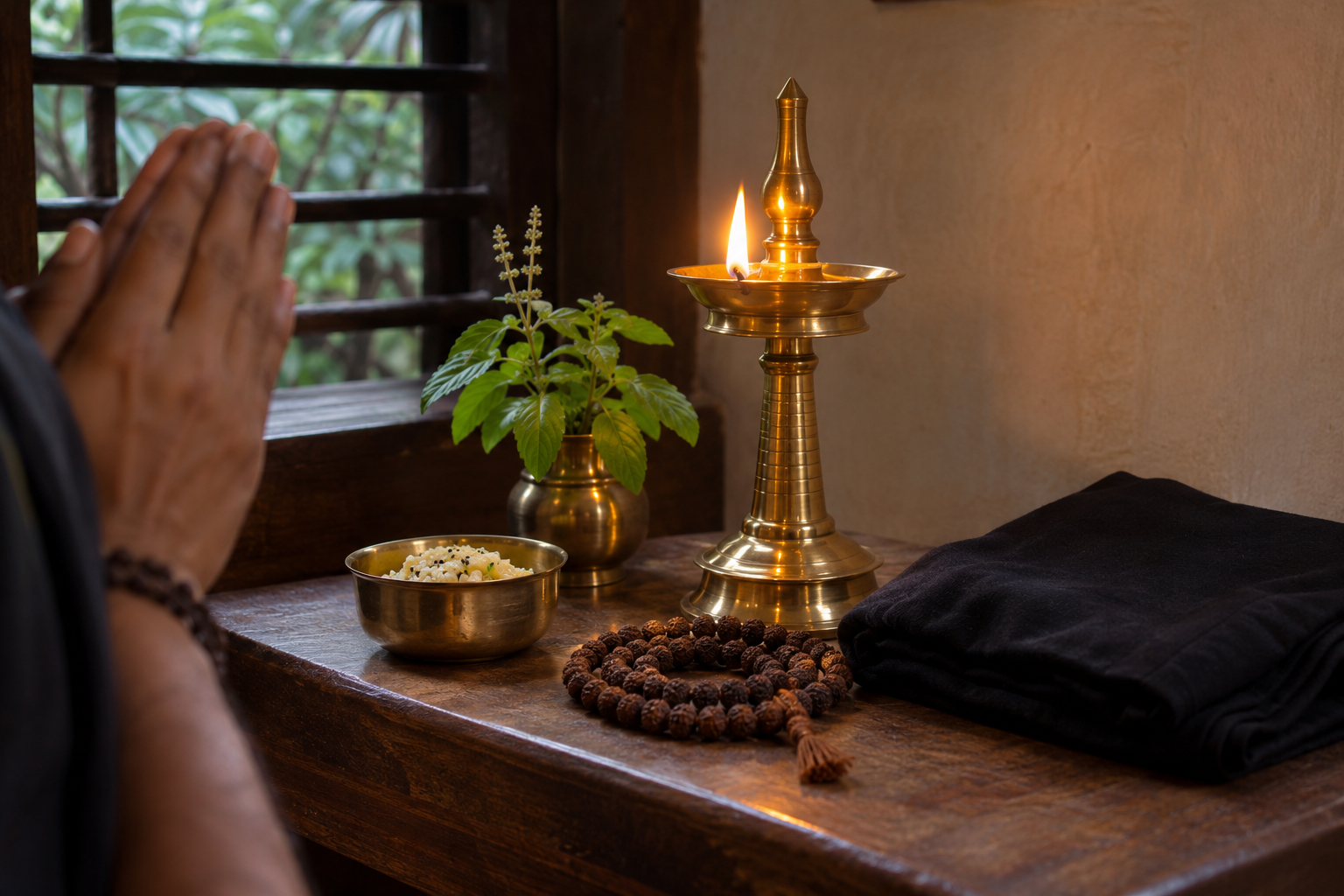
Beginning the Ayyappa vratham
Many devotees formally begin by receiving and wearing a mala, commonly a rudraksha or tulsi garland, with prayers at a temple or under the guidance of a guruswami. The mala is a visible reminder that the wearer has entered a period of observance. From this point, the devotee is often respectfully addressed as “Swami,” affirming the belief that the divine is present in every person.
Devotees usually wear plain black, dark blue or saffron clothing. The simplicity of dress reduces social distinctions and helps keep attention on the vow rather than personal display. It should be understood as a discipline, not as a costume.
Daily disciplines during Mandalakalam
Specific practices vary, but a traditional observance commonly includes:
- Bathing and praying in the early morning and evening, with repeated chanting of Swamiye Saranam Ayyappa.
- Eating simple vegetarian food and avoiding alcohol, tobacco and other intoxicants.
- Practising celibacy and restraint of the senses during the vrata.
- Speaking truthfully, avoiding anger and gossip, and treating others with patience.
- Sleeping simply and limiting luxuries, entertainment and unnecessary consumption.
- Visiting temples, joining bhajans and reading or listening to devotional accounts of Lord Ayyappa.
- Offering charity, feeding others and performing service without seeking recognition.
Health and safety should guide the way these disciplines are followed. Older adults, children, pregnant devotees and people with medical conditions should adapt fasting, walking and other physical practices with appropriate medical advice. Sincere devotion is not measured by ignoring the body’s genuine needs.
The deeper meaning of equality
One of the most distinctive teachings associated with the pilgrimage is the way devotees address one another as “Swami.” In the ideal of the vrata, distinctions of wealth, occupation and social status are set aside. Everyone travels as a seeker, depends on the group and shares responsibility for the wellbeing of fellow pilgrims.
This equality is also expressed through plain clothing, simple food and collective chanting. Mandalakalam asks the devotee to see dignity in every person and to carry that vision beyond the pilgrimage season.
Preparing the irumudi
Devotees who undertake the traditional pilgrimage prepare the irumudi kettu, a sacred two-compartment bundle carried on the head. It is normally filled and tied during a ritual led by a guruswami. The front compartment contains offerings for Lord Ayyappa, most notably a coconut filled with ghee; the rear compartment carries items for the pilgrim’s journey.
The irumudi is not ordinary luggage. Carrying it represents responsibility, surrender and readiness to complete the pilgrimage according to tradition. Pilgrims should seek knowledgeable guidance rather than assembling it casually from online instructions.
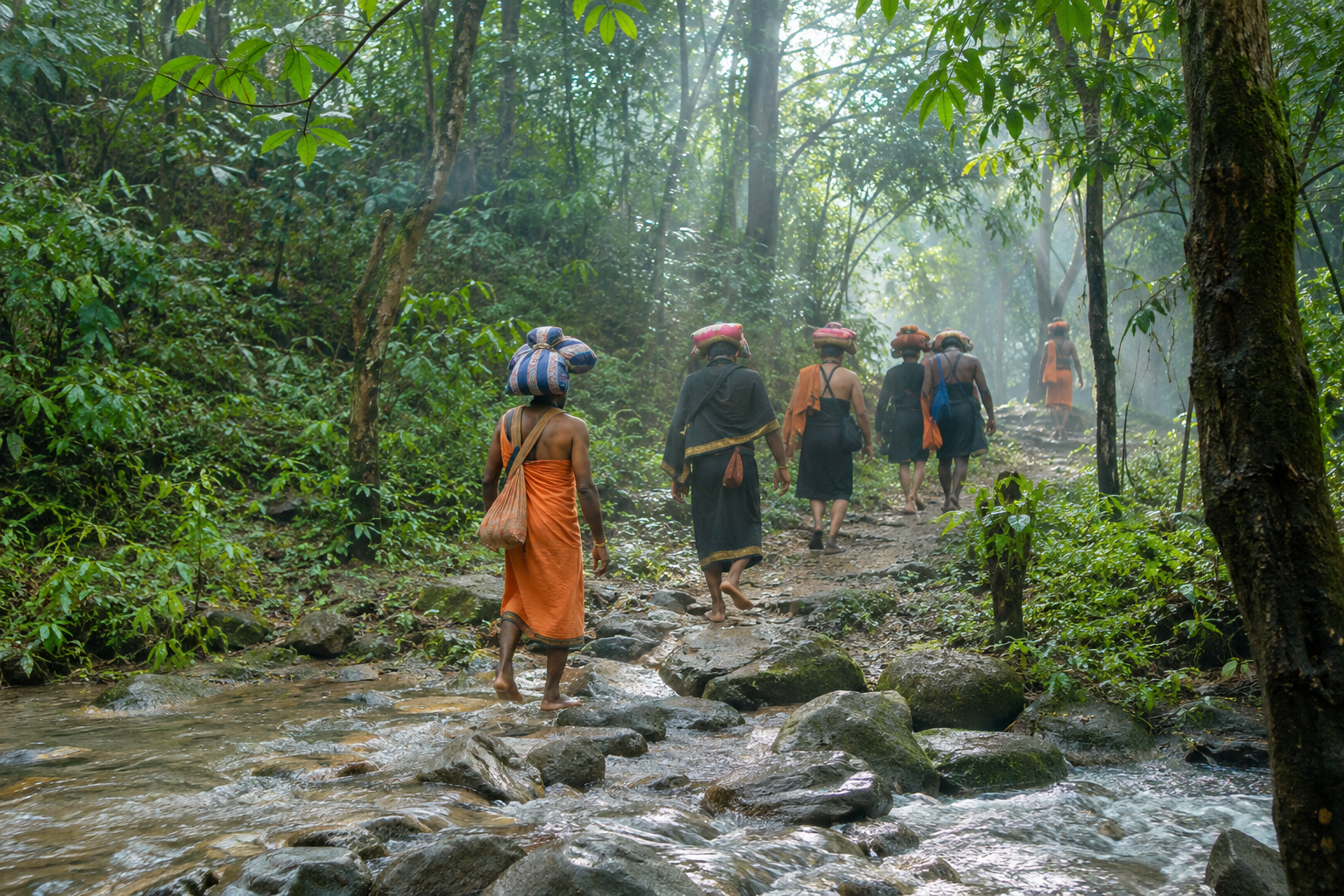
The pilgrimage to Sabarimala
Sabarimala lies amid the forests and hills of Kerala’s Pathanamthitta district. The journey traditionally includes worship at associated shrines and a physically demanding ascent. At Pamba, pilgrims prepare for the final climb, following the route and procedures currently designated by the authorities.
The sacred eighteen steps, the Pathinettam Padi, hold a central place in Sabarimala worship. Traditional pilgrims carrying the properly prepared irumudi ascend these steps toward the sanctum. The steps are interpreted in several devotional and philosophical ways; together, they signify the movement from ordinary attachments toward spiritual awareness.
Mandala Pooja and the culmination of the season
Mandala Pooja marks the ceremonial culmination of the 41-day Mandalakalam observance. For the devotee, however, completion should not mean abandoning everything practised during the vrata. Its lasting value lies in carrying some of its clarity forward: eating with awareness, speaking with kindness, reducing excess and making regular space for prayer and service.
Mandalakalam is followed by the Makaravilakku season, another major phase of worship at Sabarimala. These observances are related but distinct, and visitors should verify the separate schedules and arrangements for each period.
Responsible pilgrimage: practical reminders
- Use only official booking, virtual-queue and accommodation channels announced for the current season.
- Carry essential medicines and disclose health concerns to companions or the guruswami.
- Respect forest regulations; avoid single-use plastic and never leave offerings, clothing or waste on the route.
- Follow crowd-control instructions and do not stop in narrow passages for photographs.
- Travel within your physical capacity, stay hydrated and seek medical help early if you feel unwell.
- Honour the temple’s current rules and the dignity of fellow devotees, staff and local communities.
Frequently asked questions
When does Mandalakalam begin?
It traditionally begins on the first day of the Malayalam month of Vrischikam, usually falling in mid-November, and continues for 41 days. The corresponding Gregorian dates change each year.
Is the 41-day vratham only for people visiting Sabarimala?
Many people observe Ayyappa devotion during the season even when they cannot make the pilgrimage. A formal pilgrimage vratham, especially practices involving the mala and irumudi, is best undertaken with guidance from an experienced guruswami.
Why do devotees wear black or dark blue?
Plain dark clothing symbolises simplicity, restraint and equality. It also reduces attention to personal appearance during the vrata.
What does “Swamiye Saranam Ayyappa” mean?
It is a prayer of refuge and surrender: “Lord Ayyappa, I seek refuge in you.” It is chanted throughout the vratham and pilgrimage.
A season of inner pilgrimage
The outward journey to a hill shrine is only one dimension of Mandalakalam. Its deeper journey takes place in daily choices: a restrained word, a simple meal, an act of service, a moment of prayer. Practised with humility and sound guidance, the 41 days become a way of seeing oneself and others more clearly.
Swamiye Saranam Ayyappa.


