

The Irumudi Kettu is the sacred two-part bundle carried by an Ayyappa devotee during the traditional pilgrimage to Sabarimala. Resting on the pilgrim’s head, it contains offerings for Lord Ayyappa in one compartment and modest journey provisions in the other. More than luggage, the irumudi represents preparation, responsibility and surrender.
Its preparation is itself a ritual called Kettunirakkal. It is normally performed prayerfully under the guidance of a guruswami after the devotee has observed the Ayyappa vratham. Once tied and placed on the head, the bundle remains with the pilgrim until the offerings are presented at Sabarimala.
What does Irumudi Kettu mean?
The name points directly to its structure. Iru means two, mudi refers to the divisions or knots, and kettu means a tied bundle. The irumudi is therefore a bundle with two distinct compartments:
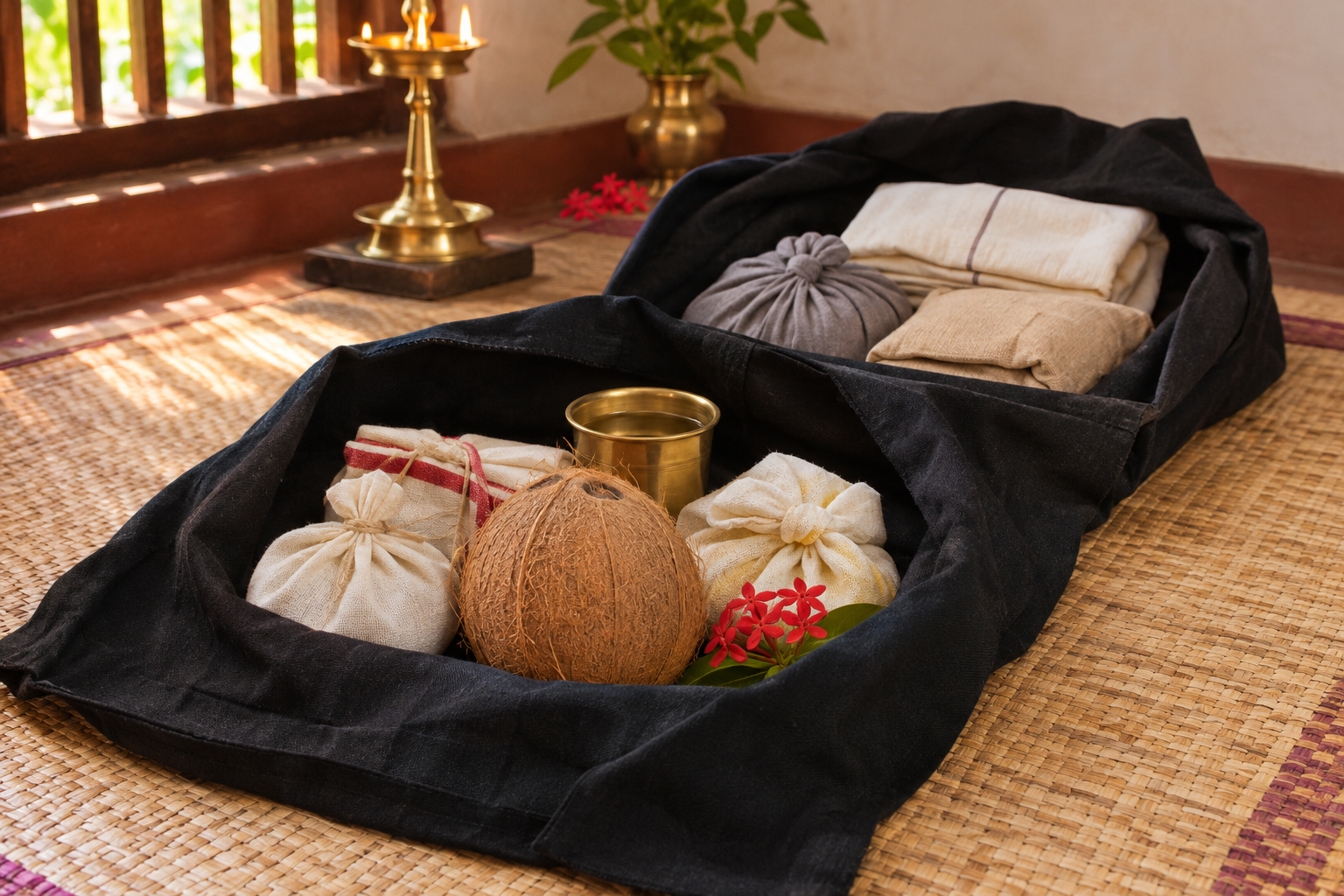
- Munmudi — the front compartment, reserved for offerings and pooja materials intended for Lord Ayyappa.
- Pinmudi — the rear compartment, used for the pilgrim’s limited personal provisions for the journey.
This division expresses an important order: the offering comes first. The devotee carries personal needs, but they are placed behind the sacred purpose of the pilgrimage.
What is Kettunirakkal?
Kettunirakkal is the ceremonial preparation and tying of the irumudi. Kerala Tourism identifies it as one of the key rituals associated with the Sabarimala pilgrimage. Rather than packing the bundle casually or alone, devotees traditionally prepare it in a temple or prayerful setting under the direction of a guruswami.
The ceremony brings together prayer, offerings and the collective support of fellow devotees. Items are placed in the appropriate compartments, the bundle is carefully tied, and it is raised onto the pilgrim’s head. The moment marks a transition: the period of preparation now becomes an actual journey toward Sabarimala.
Who is a guruswami?
A guruswami is an experienced Ayyappa pilgrim who guides others through the vrata, Kettunirakkal and pilgrimage customs. Regional usage and qualifications can vary, but the role carries practical and spiritual responsibility. The guruswami helps ensure that ritual actions are not separated from their meaning.
First-time pilgrims should seek trustworthy, experienced guidance. An online checklist cannot assess local tradition, current temple instructions, the pilgrim’s health or the needs of a particular group.
The ghee-filled coconut
The best-known offering in the munmudi is the coconut filled with ghee, often called the neyy thenga. During preparation, the coconut water is removed and the shell is filled with ghee before the opening is sealed.
Kerala Tourism explains this action symbolically as emptying worldly pleasures and replacing them with spiritual thought. At Sabarimala, the ghee is offered for neyyabhishekam, the ritual anointing of Lord Ayyappa. The emptied coconut shell is treated according to temple procedure.
The image is powerful: the hard shell can represent the body, while the ghee carried within is offered to the divine. Interpretations may vary, but the action consistently directs attention from possession toward offering.
What goes inside an Irumudi Kettu?
The exact contents can vary according to the guidance of the guruswami, regional custom and current temple arrangements. A responsible overview should therefore distinguish the structure from a fixed shopping list.
Munmudi: the offering compartment
The munmudi contains the ghee-filled coconut and other offerings or pooja materials intended for Lord Ayyappa and associated worship. These may include coconuts and small quantities of customary offering materials selected under knowledgeable guidance. Because the compartment is sacred, it should not be mixed with ordinary personal belongings.
Pinmudi: the pilgrim’s compartment
The pinmudi carries only limited necessities or provisions for the journey and customary use. Traditional packing reflects simplicity and self-reliance rather than convenience shopping. Modern safety, forest and waste regulations must also be respected; avoid prohibited materials and unnecessary packaging.
Do not add valuables, excessive weight or unfamiliar ritual items based solely on an unverified internet list. Follow the guruswami and current official guidance.
Why is the Irumudi carried on the head?
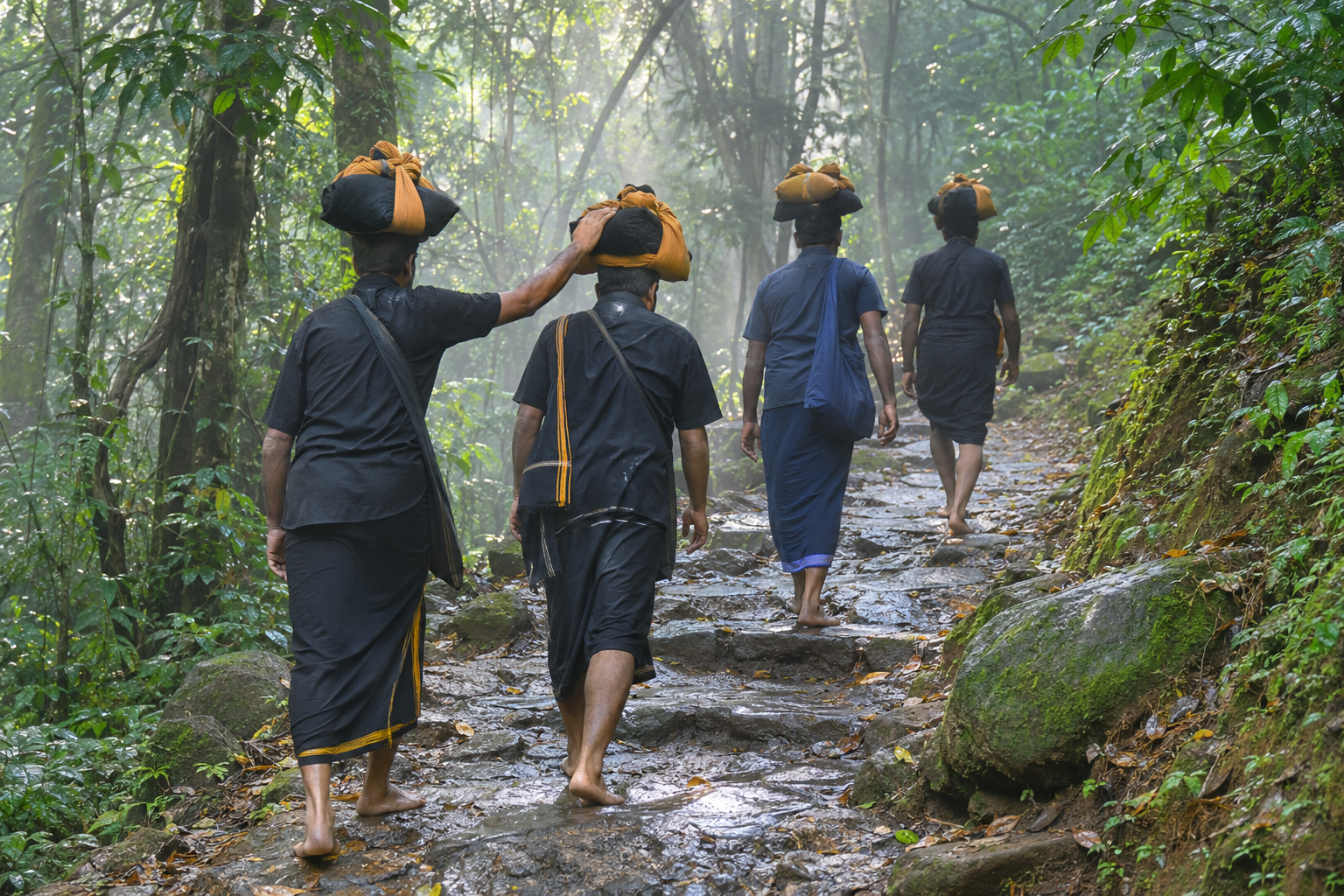
Carrying the bundle on the head gives it honour and demands awareness. The pilgrim cannot treat it like ordinary baggage thrown into a vehicle or left unattended. Each movement requires care, balance and responsibility.
The posture also makes the pilgrimage visibly collective. Devotees recognise one another as people carrying the same offering and observing the same discipline. If assistance is required, companions help respectfully without turning the sacred bundle into a burden carried carelessly.
The Irumudi and the 41-day vratham
The Irumudi Kettu should be understood as the culmination of preparation, not a substitute for it. The traditional vratham disciplines food, speech, conduct, sleep, desire and daily worship. Kettunirakkal gathers that sustained effort into a bundle carried toward Ayyappa.
Our article on Sabarimala Mandalakalam and the 41-day vratham explains the wider observance. The relationship is simple: the vrata prepares the pilgrim; Kettunirakkal prepares the offering; and the pilgrimage carries both toward Sabarimala.
Why is the Irumudi required for Pathinettam Padi?
The official Kerala Sabarimala rituals portal states that devotees carrying the irumudi are permitted to climb the eighteen sacred steps because they are considered to have observed the austerities connected with the pilgrimage. Visitors without it follow the alternative route designated by temple authorities.
The irumudi is therefore a sign of ritual readiness. It links inward discipline with the visible ascent described in our guide to Pathinettam Padi and Sabarimala’s eighteen sacred steps.
From offering to self-knowledge
The two-part bundle also speaks to a broader Sabarimala teaching. The pilgrim carries an offering for the Lord and provisions for the individual, but both travel together on one head toward one destination. The distinction between sacred purpose and personal need remains, yet neither is outside the pilgrimage.
This inward dimension complements Tat Tvam Asi at Sabarimala. The pilgrimage does not merely transport objects to a shrine; it asks what the seeker is willing to empty, carry and finally offer.
Practical guidance for carrying the Irumudi
- Prepare and tie it under experienced guidance rather than improvising.
- Keep the bundle compact and within a weight you can carry safely.
- Protect it from moisture while avoiding prohibited plastic or excess packaging.
- Do not place it casually on the ground; use the method taught by the guruswami.
- Ask a companion for help if balance, fatigue or health becomes a concern.
- Follow police, Devaswom and forest-department instructions throughout the route.
- Carry necessary medicines separately and accessibly as advised by your pilgrimage group.
Frequently asked questions
Can I prepare the Irumudi myself?
Traditional practice is to prepare it through Kettunirakkal under a guruswami’s guidance. First-time pilgrims should not rely solely on a kit or online list.
What are the two sections called?
The front offering compartment is the munmudi. The rear compartment for the pilgrim’s limited provisions is the pinmudi.
Why is a coconut filled with ghee?
The ghee is carried as an offering for neyyabhishekam. The preparation is also interpreted as emptying worldly preoccupations and filling oneself with spiritual purpose.
Can someone without an Irumudi visit Sabarimala?
Yes, subject to current temple rules and access arrangements. However, the traditional ascent of Pathinettam Padi is reserved for eligible devotees carrying the irumudi; others use the designated approach.
Is every Irumudi packed with exactly the same items?
No. Core ritual elements and the two-part structure are shared, but detailed contents may vary by tradition and guidance. Current regulations should also be followed.
A bundle of responsibility
The Irumudi Kettu makes the purpose of pilgrimage tangible. The devotee carries offerings, necessities and the visible result of weeks of discipline. Its weight is modest, but its meaning is substantial.
When prepared with knowledge and carried with humility, the irumudi teaches a simple order: offer first, take only what is needed, accept guidance, help fellow pilgrims and move steadily toward the sacred. Swamiye Saranam Ayyappa.


